Upright, Mounded or Spreading: Reading Plant Form
Reading upright, mounded or spreading plant form helps you choose plants for height, softer transitions and a settled border outline from your main viewpoint.
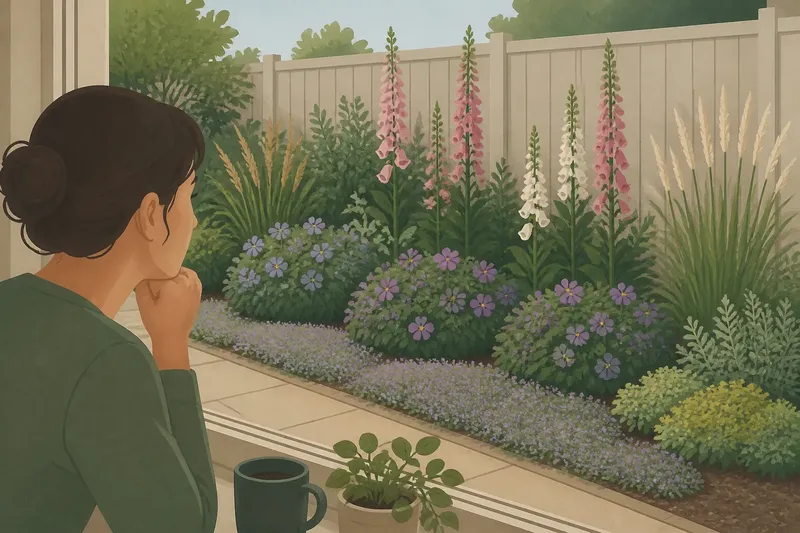
Which plant shapes will make your border work from the kitchen window, path or garden seat? Reading upright, mounded or spreading plant form helps you decide before buying another plant for its flowers alone.
Form is the outline a plant makes and the direction its stems and leaves grow. It differs from mature size: a narrow plant can rise high, while a low one may reach sideways. Think of the border as a bookshelf: each shape needs a place where it can be seen, not merely a gap in which to stand.
Plant form helps organise a border
Upright plants create vertical accents, mounded plants make rounded shapes, and spreading plants grow sideways or trail over an edge. These are useful descriptions rather than strict botanical categories; a plant’s outline can change as it matures or responds to its conditions.
Start with the view that matters most. A border seen from one side can place taller plants behind shorter ones; an island bed needs its main shapes to read from several directions. Check plant labels for mature height, spread and growing conditions, then compare those details with the space available.
Upright plants add a clear vertical accent
Foxgloves, delphiniums and many ornamental grasses can bring height without occupying as much width as a spreading plant. Their actual size and needs vary, so choose for both height and likely footprint rather than assuming that a tall plant will be slim.
Use upright forms to mark a bend, punctuate a long border or give a low planting a visible point of reference. A scattered group usually looks less rigid than a perfectly even row. From the main viewing position, check that the accent is not hidden by taller neighbours or placed where it blocks smaller plants.
Mounded plants ease changes in scale
Hardy geraniums, compact hebes and small-leaved shrubs can form rounded or gently domed outlines, depending on the variety and site. Their shape can soften the transition between a taller accent and lower planting without making the whole border look level.
Leave room for a mound to grow. Plants that touch in their nursery pots may eventually merge into one mass, making individual outlines harder to distinguish and access harder to maintain.
Spreading plants define the lower edge
Creeping thyme, ajuga and some sedums can travel across soil or soften the edge of paving. Their habits differ, so check whether a plant creeps by runners, self-seeds or stays relatively contained. Decide where its growth should stop before planting; a path edge is easier to manage than a slow neighbour it has already covered.
Use a spreader where a low outline is part of the design, not simply because the soil is visible. Keep clear space around plants whose stems or lower foliage you want to see. A spreading layer can make a border feel connected, but it can also conceal the structure you meant to display.
Adjust plant outlines with a short seasonal check
There is no need to inspect every plant on a strict calendar. A few checks at useful moments will show whether the intended shapes remain visible and whether growth is crossing a boundary.
- Before spring growth fills the bed: Look from the main viewpoint. If evergreen mounds or standing stems still give the border structure, leave them in place; if a visible gap interrupts the outline, note it for later planting rather than filling it immediately.
- As new growth appears: Check the edge of each spreading plant. If it is entering a space reserved for a neighbour, redirect or trim the edge if suitable; otherwise, plan to divide or replace it at an appropriate time.
- During flowering: Look for outlines hidden by taller neighbours. If a focal plant disappears from the chosen view, consider relocating it; if it remains clear, avoid adding height simply to make the border busier.
- After flowering: Judge the plant without its blooms. If stems still contribute useful structure and suit the plant’s needs, leave them; if they obstruct access or look untidy, remove them where appropriate.
- Before making a larger change: Note which plants have outgrown their allotted space. If one plant is the problem, adjust that relationship first; if several shapes compete, reconsider their positions before buying replacements.
Which plant form suits common border problems?
How do I add height to a narrow border?
Choose an upright plant whose mature spread fits the available width, and place it where it can be seen above lower neighbours. If the border is long, use a few considered accents rather than turning every plant into a vertical feature.
How can I soften a hard edge?
Choose a low plant suited to the light and soil at the edge, then check how far it is likely to spread. If it would encroach on a path, use a contained mound instead.
Can a plant change form as it grows?
Yes. A plant may begin upright and arch as it matures, or form a mound that gradually widens. Plan for its likely mature outline rather than relying on the shape it has in its pot.
What should I change if the border looks flat?
Check whether one outline dominates the planting. If so, add a well-placed upright accent or break up a broad low area with mounded plants; if the existing forms already vary, adjust their positions before adding more.
Work through a border decision before buying
Imagine a narrow border beside a plain fence, viewed from a kitchen window. Its starting point is a low strip of thyme along the paving and a row of hardy geraniums behind it; the fence hides the flower spikes of a foxglove group near the back.
First, stand at the window and confirm that the spikes are hidden. Next, check the foxgloves’ label and compare their expected height and spread with an open position nearer the visible end of the border. If the space fits, move the group there during a suitable planting period. Then check the geraniums’ mature spread and leave room between them and the thyme. The expected result is a visible upright accent, a rounded middle and a low edge; the trade-off is that the planting may look less full until the plants settle in. If no suitable position fits the foxgloves, choose a narrower upright plant instead of crowding the border.
Reading upright, mounded or spreading plant form is most useful when each shape has a clear job and room to fulfil it. Before choosing a replacement, check the border from its main viewpoint and compare the plant’s mature outline with the space it will occupy; that small pause can save a large amount of rearranging.